
Article · Updated April 2026
Vitamin D After Gastric Sleeve Surgery: What You Need and Why

David Gans, founder, gastric bypass patient, lost 231 lbs · Researches sleeve vitamins weekly
Medical disclaimer: I am not a doctor. I am a bariatric patient sharing what I have learned from my own experience and from bariatric guideline sources. Always follow your bariatric team, your lab work, and your surgeon's instructions.
Vitamin D deficiency was already common among people seeking bariatric surgery before their operation. Studies show that 50 to 80 percent of bariatric patients arrive at surgery with insufficient vitamin D levels.
After sleeve surgery, the picture changes. Absorption is affected differently than with bypass, but the risk is still real. Here is what sleeve patients specifically need to know.
ASMBS Vitamin D Recommendation for Sleeve
- Minimum 3,000 IU of vitamin D3 daily
- Use D3, not D2
- Target blood level: 30–60 ng/mL
- Sleeve note: duodenum intact but reduced fat intake still causes deficiency risk
Why Sleeve Patients Still Get Vitamin D Deficiency
What Works in Your Favor
- ✓ Duodenum intact
- ✓ Main absorption site preserved
What Still Causes Deficiency
- ✗ Less dietary fat intake
- ✗ Faster gastric emptying
- ✗ Smaller meals
Net result: still need 3,000 IU D3 daily and regular blood testing.
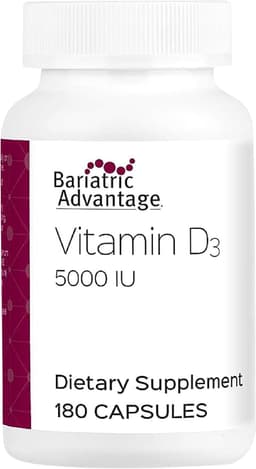
Bariatric Advantage
Vitamin D3 5000 IU Water-Miscible
Water-miscible D3 absorbs without needing dietary fat, key for bariatric patients with reduced fat absorption.
Buy on Amazon →How does gastric sleeve affect vitamin D absorption?
Vitamin D is a fat-soluble vitamin absorbed primarily in the duodenum and upper small intestine. Unlike bypass, sleeve surgery does not reroute the small intestine. The duodenum remains part of your digestive path.
This is good news for vitamin D absorption compared to bypass. The main absorption site is intact.
However, two things still affect vitamin D status after sleeve. First, most sleeve patients eat significantly less food, including dietary fat. Vitamin D needs fat to absorb properly. Eating less fat means less vitamin D absorption from food. Second, the smaller stomach empties food faster into the intestine, which can reduce absorption time.
The combination means that even though the absorption pathway is intact, many sleeve patients still develop vitamin D insufficiency over time without consistent supplementation.
How much vitamin D do you need after sleeve?
The ASMBS recommends a minimum of 3,000 IU of vitamin D3 per day for all weight loss surgery patients, including sleeve. Johns Hopkins recommends 3,000 to 6,000 IU daily, adjusted based on blood testing.
Always use vitamin D3 (cholecalciferol), not D2 (ergocalciferol). Vitamin D3 raises blood levels more effectively. The ASMBS guidelines note that D3 is 70 to 90 percent more potent than D2 at equal doses.
What does long-term vitamin D deficiency cause after sleeve?
In the short term, low vitamin D causes fatigue, muscle weakness, and general aches that are easy to dismiss as normal post-surgery effects.
Long term, the consequences are more serious. Vitamin D deficiency after bariatric surgery contributes to bone loss. Without adequate vitamin D, calcium absorption is impaired even when you are taking enough calcium. Over years, this leads to reduced bone density, and eventually osteoporosis.
Sleeve patients have lower rates of bone loss than bypass patients, but the risk is not zero. Regular vitamin D testing and consistent supplementation are part of long-term health maintenance after sleeve surgery.
Calcium and vitamin D work together. Learn why calcium citrate is the right form and how to split your doses correctly.
Read: Calcium After Gastric Sleeve →What should your vitamin D level be?
The blood test is 25-hydroxyvitamin D, or 25(OH)D. Target range after bariatric surgery is 30 to 60 ng/mL. Many bariatric programs aim for levels above 40 ng/mL.
Below 20 ng/mL is clinically deficient. Between 20 and 29 is insufficient. If you are below 30, supplementation needs to be increased.
Test at every follow-up blood draw and discuss results with your bariatric dietitian.
Does your sleeve multivitamin have enough vitamin D?
Check the label. Look for vitamin D3, not D2. Most quality sleeve-specific multivitamins contain 2,000 to 3,000 IU per serving. This meets the minimum recommendation but may not be enough for patients who arrive post-surgery already deficient.
If your blood levels do not reach target on your current multivitamin dose, a standalone vitamin D3 supplement is an inexpensive and easy addition. Softgel capsules containing oil are the most bioavailable form.
When is the best time to take vitamin D?
Vitamin D is fat-soluble. Take it with a meal that contains some fat. A meal with salmon, eggs, cheese, avocado, or olive oil helps absorption significantly.
Do not take vitamin D on an empty stomach. The fat component in your meal is what triggers the transport mechanism for fat-soluble vitamins in the gut.
The bottom line on vitamin D after sleeve
Sleeve surgery does not bypass the main vitamin D absorption site, but reduced fat intake and faster gastric emptying still make deficiency a real risk. Target 3,000 IU of vitamin D3 daily. Test blood levels regularly. Aim for 30 to 60 ng/mL. Take D3 with a fat-containing meal.
Bone health is a long game. The decisions you make now about vitamin D affect your bones ten and twenty years from now.
Vitamin D Quick Reference
- Daily target: 3,000 IU minimum
- Use D3, not D2
- Take with: a fat-containing meal
- Blood test: 25(OH)D
- Target: 30–60 ng/mL
- Test: at every follow-up
Related Articles
What Vitamins Do You Need After Gastric Sleeve?
Full guide to all vitamins required for life after sleeve surgery.
Read →How Much B12 Do You Need After Gastric Sleeve?
B12 needs after sleeve: doses, forms, and how often to test.
Read →Best Multivitamin After Gastric Sleeve (2026)
Sleeve multivitamins ranked by price per day. Updated April 2026.
Read →Considering a different surgery?
Gastric Bypass Vitamin Guide
If you had bypass like our founder, here is the dedicated bypass site with 45mg iron comparisons.
Read →All Bariatric Multivitamins Compared
Browse multivitamins for every bariatric surgery type in one comparison.
Read →Frequently Asked Questions
Why do sleeve patients get vitamin D deficiency if the duodenum is intact?
The main absorption site is intact, but vitamin D needs dietary fat to absorb. After sleeve, most patients eat significantly less fat. The smaller stomach also empties faster, reducing absorption time. The result is insufficient vitamin D despite an intact digestive route.
What is the target vitamin D level after sleeve?
Target range is 30 to 60 ng/mL. Many programs aim above 40 ng/mL. Below 20 ng/mL is deficient. Test via 25-hydroxyvitamin D at every follow-up.
Is vitamin D3 really better than D2?
Yes. The ASMBS guidelines note that D3 is 70 to 90 percent more potent than D2 at equal doses. Always check your label and choose D3 (cholecalciferol), not D2 (ergocalciferol).
🏆 Ready to find your best sleeve vitamin?
We compare all 15 bariatric multivitamins by price per day, iron level vs the 18mg ASMBS sleeve baseline, and full nutrient breakdown. Updated weekly.
Compare All 15 Sleeve Vitamins →